
Why manufacturing facilities face unique risks
Manufacturing environments bring a complex mix of production pressures, heavy equipment, many contractors/visitors, open access points, and regulatory safety protocols. While occupational safety and health (OSHA) rules are well-understood, many facilities treat security as a subset of general safety, or as an “if-time-permits” initiative.
When safety and security aren’t purposefully owned, gaps emerge: unlocked access points, minimal threat awareness, no tabletop training, and no one responsible for incident prevention. That gap can cost time, money, workforce trust and productivity.
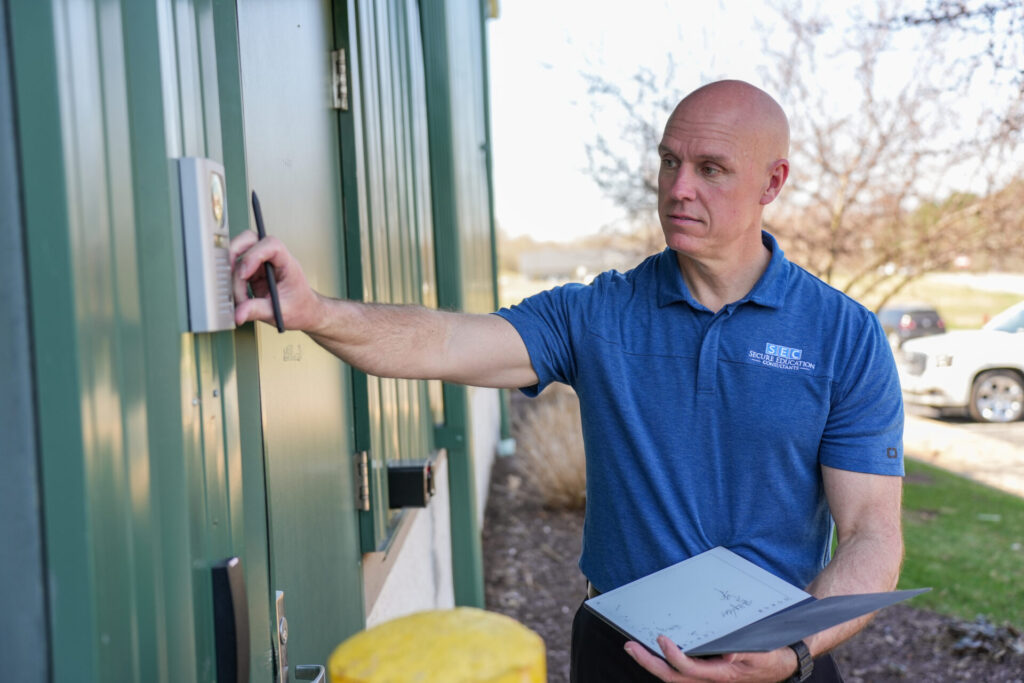
A facility is most vulnerable when no one owns security and becomes most resilient when everyone understands it.
The challenge: productivity vs. protection

In manufacturing, every minute of downtime means lost output. When safety or security get relegated to the back burner, it’s because production must keep moving. But the best organizations don’t see safety and security as hindering output; they see it as enabling it. A facility with strong access control, clear roles and responsibilities, and tabletop-driven readiness can avoid unplanned shutdowns, mitigate risk, and maintain steady production lines. At the same time, training in behavioral threat awareness and security culture sends a message that protection is part of the operation, not added on.
How SEC supports manufacturing facilities
SEC helps manufacturing operations strengthen security in ways that align with production realities. Our approach is built around practical steps that make security manageable, including access control strategies, clear ownership frameworks, behavioral threat assessment training, tabletop exercises, and seamless integration with existing OSHA and safety protocols. We turn security from a side responsibility into a structured part of daily operations.
Testimonial
The ROI of proper security in manufacturing
While safety ensures regulatory compliance and workforce wellbeing, security ensures business continuity, asset protection and operational resilience. Facilities without a defined security program face higher risks of production stoppages, theft or vandalism, internal threats and reputational damage, all of which can impact the bottom line.
Protect your people and proactively manage risk before it becomes a crisis by investing in a layered security strategy.